Tuesday, January 8, 2013

Parisa & Ensemble Darvish - Bayat-e Tork - Copy of an Iranian Cassette from the 1970s


Parisa (or Parissa), born 1950, is one of the foremost female singers of Iran. She studied with the famous Radif master Mahmud Karimi (1927-1984) and with Ostad Dariush Safvat (born 1928). We present here a cassette we bought in the 1980s in an Iranian shop in London. This cassette has better sound quality than other edtions of the same recording circulating in the Iranian community, even better than the CD. This cassette, manufactured in England, contains the mode Bayat-e Tork recorded in Iran before the revolution. See more on the artist on her website: http://www.parissa.org/05_biography/biography.htm
The Ensemble Darvish was directed by Santoor player Reza Shafieian (born 1941). The Tar and Setar player might be Dariush Tala'i.


Bayat-e Tork (both sides joined into one track) (38:02)
1. Tasnif Mehrabani
2. Chaharmezrab Santoor
3. Avaz (singing) & Nay
4. Avaz & Tar (in reality Setar)
5. Avaz & Kemencheh
6. Tasnif Hamchu Farhad Shadeh
7. Chaharmezrab Nay
8. Zarbi Tork
9. Avaz & Tar
10. Tasnif
11. Zarbi Reng


Friday, January 4, 2013

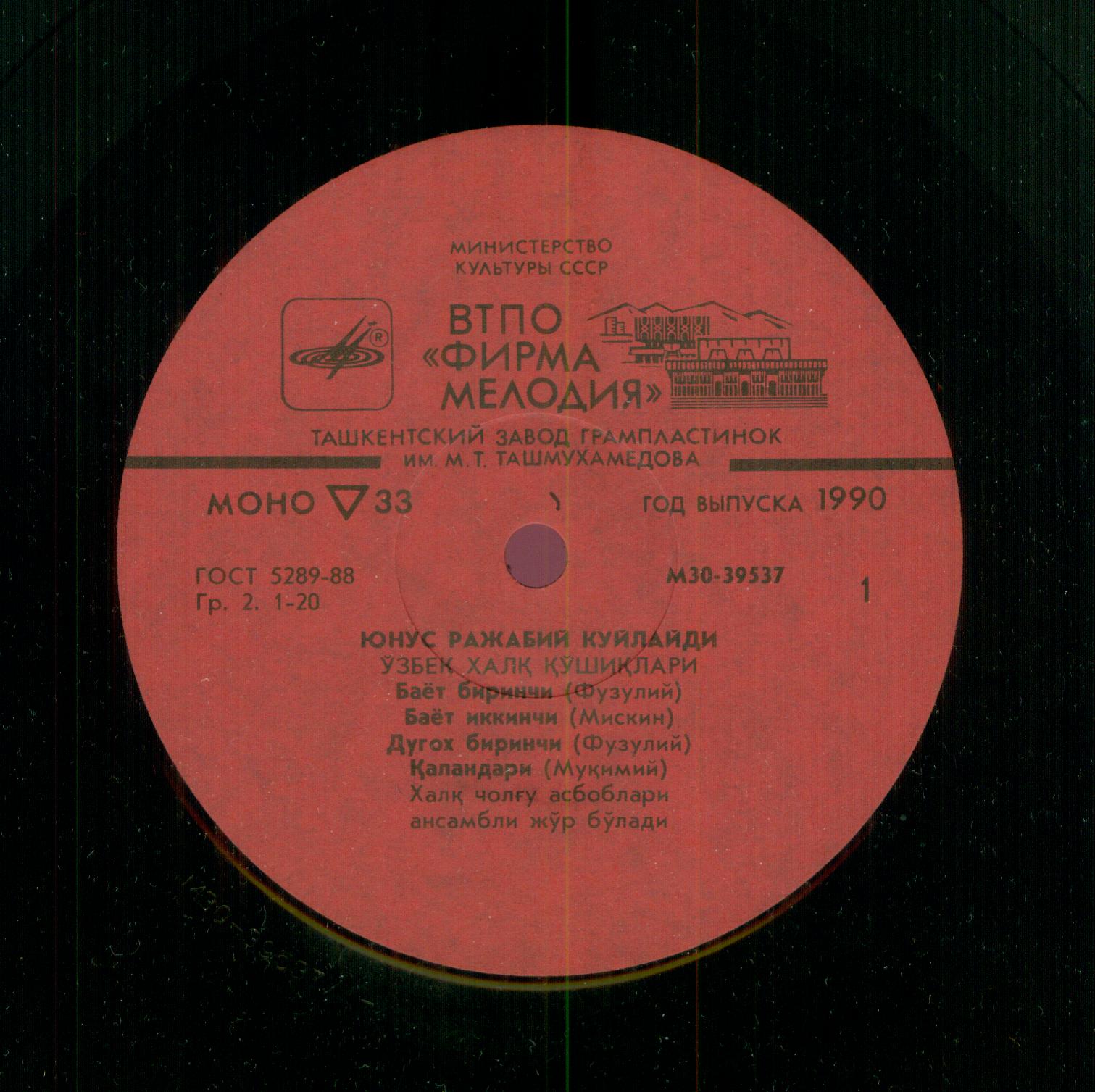
Yunus Rajabi (Rajabiy) (1897-1976) - Yunus Rajabi performs Uzbek National Songs - Double LP Melodiya


A double LP of solo performances, partly from the repertoire of the Shashmaqam (LP 1), by the great master of Shashmaqam (see here his complete Shashmaqam).

Side 1:
1. Bayyot I (Fuzuli) (8:51)
2. Bayyot II (Miskin) (4:18)
3. Dugoh I (Fuzuli) (5:22)
4. Qalandari (Mukimi) (3:20)

Ensemble of national instruments


Side 2:
1. Ushshok (Navoi) (7:14)
2. Chorgoh (Yu. Saryomi) (8:24)
3. Adoyi va Asiri (Furkat and Miskin) (7:04)

Quartet of national instruments (1)
Ensemble of national instruments (2, 3)


Side 3:
Uzbek national songs:
1. Kucha Bogi (Street garden) – I (Mukimi) (6:51)
2. Kucha Bogi (Street garden) – II (Navoi) (5:47)
3. Sarparda (Navoi) (6:52)

Ensemble of national instruments


Side 4:
1. Kuygay (Yu. Rajabi – Kh. Olimzhon) (2:51)
2. Girya I (national music, Navoi and Mukimi) (7:30)
3. Girya II (national music, Bobir) (5:20)
4. Koshki (If only) (Yu. Rajabi  – Navoi) (3:38)

Ensemble of national instruments (1-3)
Orchestra of national instruments (4)


Thanks to Danny for sharing this double-LP
and to Berdak Bayimbetov for the translations and transcriptions.

Sunday, December 30, 2012

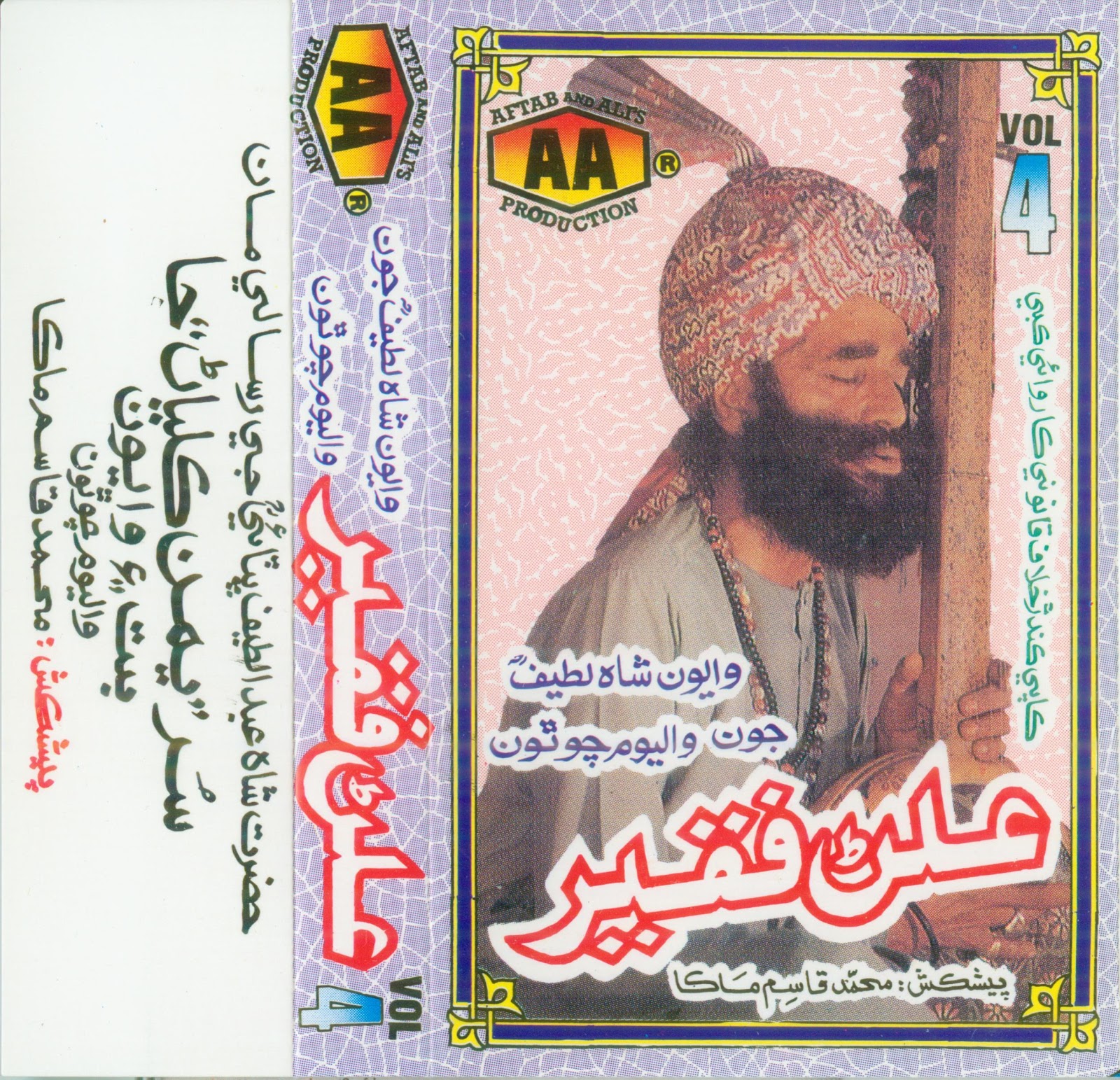
'Alan Faqir - Vol. 4 - Sufi Music from Sindh - Cassette from Pakistan


Another beautiful casette by the legendary Sufi singer.

Side A (23:57)
Side B (24:01)


Many thanks again to Danny for sharing this cassette.

Friday, December 28, 2012

Zarsanga - Pashto Folk Music - Lok Virsa FK 0015 - Cassette from Pakistan


Beautiful folk music accompanied mainly on Rabab, Flute and Dholak.

Side A (31:10)
Side B (30:46)


Many thanks to Danny for sharing this cassette.

Zarsanga is a famous Pashtu singer widely known as The Queen of Pashtun Folklore. She was born in 1946 at Zafar Mamakhel, a small village of Lakki Marwat. She belongs to a nomadic tribe that used to settle in Afghanistan in summer and stay in Lakki during the winter. In 1965, she married Mulajan, a resident of Sarai Naurang (Bannu) who was also a nomad. Many people believe she is married to popular folk singer Khan Tehsil, but she denies the rumours:
“Actually I sang with him on many occasions and most of our joint songs got immense popularity. He is not my husband he is just like my own brother”.
Zar Sanga has four daughters and two sons. Only Shehzada, her second son, has stepped into the world of music. At the start of her career, Zar Sanga would listen to the songs of Gulnar Begum, Kishwar Sultan, Bacha Zarin Jan, Khial Mohammad, Ahmad Khan and Sabz Ali Ustad. “I liked all of them, but I have maintained my own traditional way of folk singing. The people would earnestly enjoy my songs on both sides of the Durand Line (Pakistan-Afghan border). “I got no education so I cannot sing from a written paper. Most often I sing the songs that are composed and created by the common folk. However my husband also wrote some of my popular songs”, she said. A French researcher, Miss Kia, who worked with Radio France, once said Zar Sanga’s voice was the only mountainous voice in the Pashto language. Miss Kia took Zar Sanga to France for a musical concert. In France, many people were fascinated by her sweet melodies. The Pashto singer described a concert in London: “I was singing a traditional folk song in Pashto about the mountains and gypsy life of the tribals and when I finished it, a British person came close to me and proudly remarked that he was also a gypsy.” The famous numbers of Zar Sanga, which she never misses at any musical event she plays are Da Bangriwal Pa Choli Ma Za (her first-ever song on radio), Zma Da Khro Jamo Yara, Rasha Mama Zwi De, Zma Da Ghrono Pana Yara, and Kht Me Zanzeri De. Zar Sanga has been to Germany, Belgium, Iraq, Dubai, America, France and UK and has enthralled thousands of Pakhtuns and local people with her voice.

Wednesday, December 26, 2012

'Alan Faqir - Vol. 1 - Sufi Music from Sindh - Cassette from Pakistan


Side A (23:05)
Side B (23:22)


Many thanks to Danny for sharing this cassette.

'Alan (Allan) Faqir (1932-2000) was one of the foremost exponents of Sufi music in Pakistan. He was particularly known for his ecstatic style of performance marked with extreme devotional rhetoric and sufi dance singing. Deprived of a mother's love, he went off in search of someone who could replace that love. He arrived at the tomb of Shah Abdul Latif Bhitai in Bhit Shah and started living there. Faqir's memory was sharp even though he could not read and write. Hearing the traditional Latifi Raag sung every night touched his heart. Encouraged by Faqir Zawar Qurban Ali Lanjwani and Moolchand Maharaj, he began singing Bhitai's poetry at the shrine and ultimately spent twenty years there until meeting Mumtaz Mirza, who introduced him to Radio Pakistan and ptv in Hyderabad and helped him to learn the correct pronunciation of Bhitai's poetry. Eventually, he became a performing legend. 

Sunday, December 23, 2012

More Rudra Veena - Anant Bedekar (1921- ? )


Side 1:
Raga Malkauns - Alap (6:41)

Side 2:
Raga Malkauns - Jod (6:24)


Additional tracks:
Raga Madhukauns - Alap (4:50)
Raga Madhukauns - Jod (12:56)


Many thanks to KF for sharing generously these rare recordings.

"Born in a family of music lovers, Anant Bedekar also played the sitar and the surbahar. His music, he said, was neither in the dhrupad nor in the khyal style. His expressive playing technique and the singular sound of his bin made him an original binkar at any rate, unjustly condemned to obscurity.
Anant Bedekar (1921 - ?), doctor and binkar, enjoyed the mixed instruction of Laxman Rao Chavan, son of Balvant Rao Chavan, one of Bande Ali Khan’s disciples."